
Before the
Move
What to understand and prepare while you're still in Korea. Each card is a focused topic — start at the top or jump around.
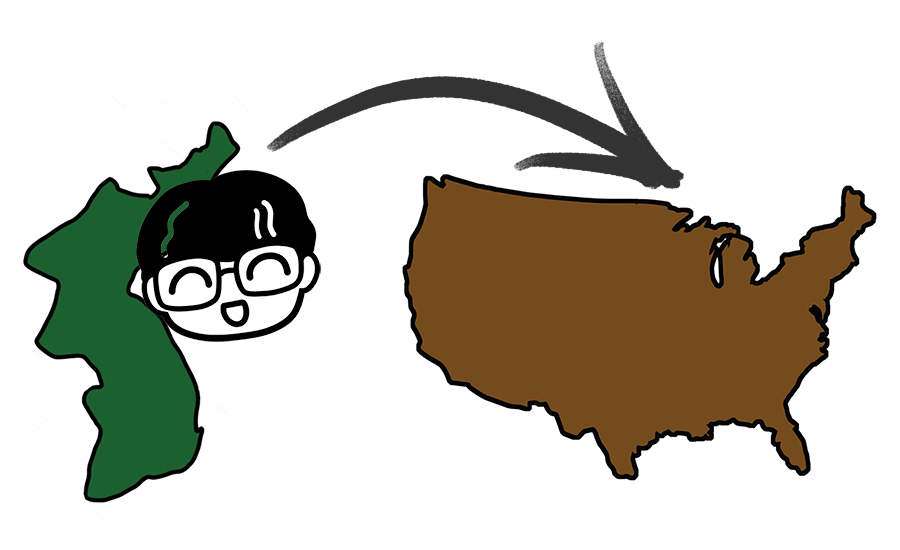
Before Moving to the U.S.
The U.S. school system, GPA, schools, sports, clubs, and social life.
Understanding the U.S. School System
School Calendar
American schools usually begin in late August or early September. Summer break is long — often around three months — and winter break is much shorter.
The starting date varies by school, so always check the official school website for exact dates. For example, my high school's site: ths.tenaflyschools.org. Every U.S. high school has its own official site with useful info.
Summer
In Korea, summer break often means heading straight to "Hagwon" to keep up with academics. In the U.S., it can be the most strategic stretch of the year. It's a chance to start a new extracurricular or get ahead on exams like the SAT.

Advice
Those three months can turn into one of the most meaningful parts of your U.S. college application, but only if you actually do something with them. So if you spend the whole summer in "school's out, let's just chill!" mode, it can come back to bite you later. Need a place to start digging? These sites round up programs you can browse for ideas:
[TeenLife] — a searchable directory you can filter by interest, cost, and format (free and paid).
[PrepScholar's list] — a big, honest roundup of 177 programs by state, with a real talk on costs.
1. Watch those deadlines!
Here's a trap a lot of students fall into: programs that start in mid-June often close applications as early as January, especially the more selective ones. So your summer plan can't wait until summer. You've got to map it out over the winter and get your applications in early. Plan in the cold, play in the heat.
2. Pricey camp ≠ a ticket into a good college.
Let's be clear: an expensive program is not a guaranteed admit, and it's not automatically a "good" one either. What you're paying for is the experience — the people, the skills, the new things you get to try — not the name on the brochure. Chase what you'll actually get out of it, not the title.
Winter
Winter break is short, and it's usually similar in length to other holiday breaks like Christmas break. My school had winter break in late January and Christmas break in late December.
Spring
Spring break is also short — about one week, usually in early April.
Grade Placement
When you make the move from Korea to the U.S., two things you'll want to wrap your head around ahead of time are the September school-year start and how grade placement works. The exact rules depend on where your school is, so the most reliable move is to check your school district's specific cutoff. Most districts place students based on a September birthday cutoff. Still, because the Korean and U.S. systems line up differently, you can end up shifting up or down by about half a year.
For example, I was born in July 2008. In Korea, I'd already made it halfway through 중3, the third year of middle school, which actually lines up with U.S. 9th grade. But that half-semester didn't carry over: instead of moving on, I had to set it aside and start 9th grade from scratch in the U.S. in September 2023. That's what "dropping half a year" really means. You redo ground you've already covered.
Advice
Pick your grade carefully — it matters more than it looks.
In the U.S., college applications kick off around November of senior year (12th grade). So coming in half a year lower basically hands you an extra year to get ready, which is exactly why grade placement deserves real thought. Enter as a 10th grader and you've only got about two years to build your record before applications open, and that puts you at a real disadvantage. There's also a practical reality here: if you finish, say, your first year of high school in Korea and then transfer into U.S. 10th grade, admissions officers tend to lean most heavily on your U.S. high school years.
School Counselor
One of the most important people to understand in an American school is the school counselor. A counselor is not just someone you visit when you have a problem — they help with course selection, schedule planning, graduation requirements, college preparation, and adjusting to school life.
For Korean students, it's important to understand that the "homeroom" is not as significant in the U.S. as in Korea. Students don't usually interact much with their homeroom teacher (담임 선생님) unless that teacher also teaches them another subject. Instead, students go to school counselors for literally anything about school.
Counselors can help decide:
- Which grade you enter
- Which English level or ESL/ELL support you need
- Which math class you are placed into
- Whether you can take Honors or AP classes
- Whether your Korean transcript can be used for placement
- Whether you need placement tests
- Whether your schedule can be changed after school starts
- Whether you are on track for graduation
- What courses to take if you plan to apply to U.S. colleges
In the U.S., students are expected to speak directly with counselors and teachers. Parents can help, but students should learn to ask questions and explain their goals themselves. In American schools, if you don't ask, people assume you're okay with your current placement.
From experience
Counselors often want you (the student) to ask questions directly, not your parents. They also write your college recommendation letters — so building a good relationship matters.
Before even arriving, I recommend emailing your counselor with any questions — or even just a simple hello.
Lunch
Lunch works a little differently here
Unlike Korea, U.S. public schools don't serve everyone the same set meal. You handle lunch on your own — buy it from the cafeteria, pack your own, or (depending on the school) step off campus to grab something nearby. Where you pay, cafeteria food is cheap, usually just a few dollars; in a number of states it's actually free for all students. Plenty of kids bring their own anyway, often a simple sandwich, or a homemade lunchbox from their own food culture. And if you grew up on Korean school meals, the cafeteria food may take some getting used to.
Advice
That said, school meals are slowly getting better — there's real pressure across the U.S. to improve them. But change is harder than it looks: tight budgets, safety rules, and the challenge of feeding students from so many different food cultures all get in the way.
Here's what really matters, though: lunch isn't about the food. It's one of the best windows in your day to meet people. So if you're new, don't eat alone. Grab lunch with someone you've met in class. It sounds small, but that's exactly how friendships start here and it turns that awkward "where do I sit?" moment into something that you actually look forward to.
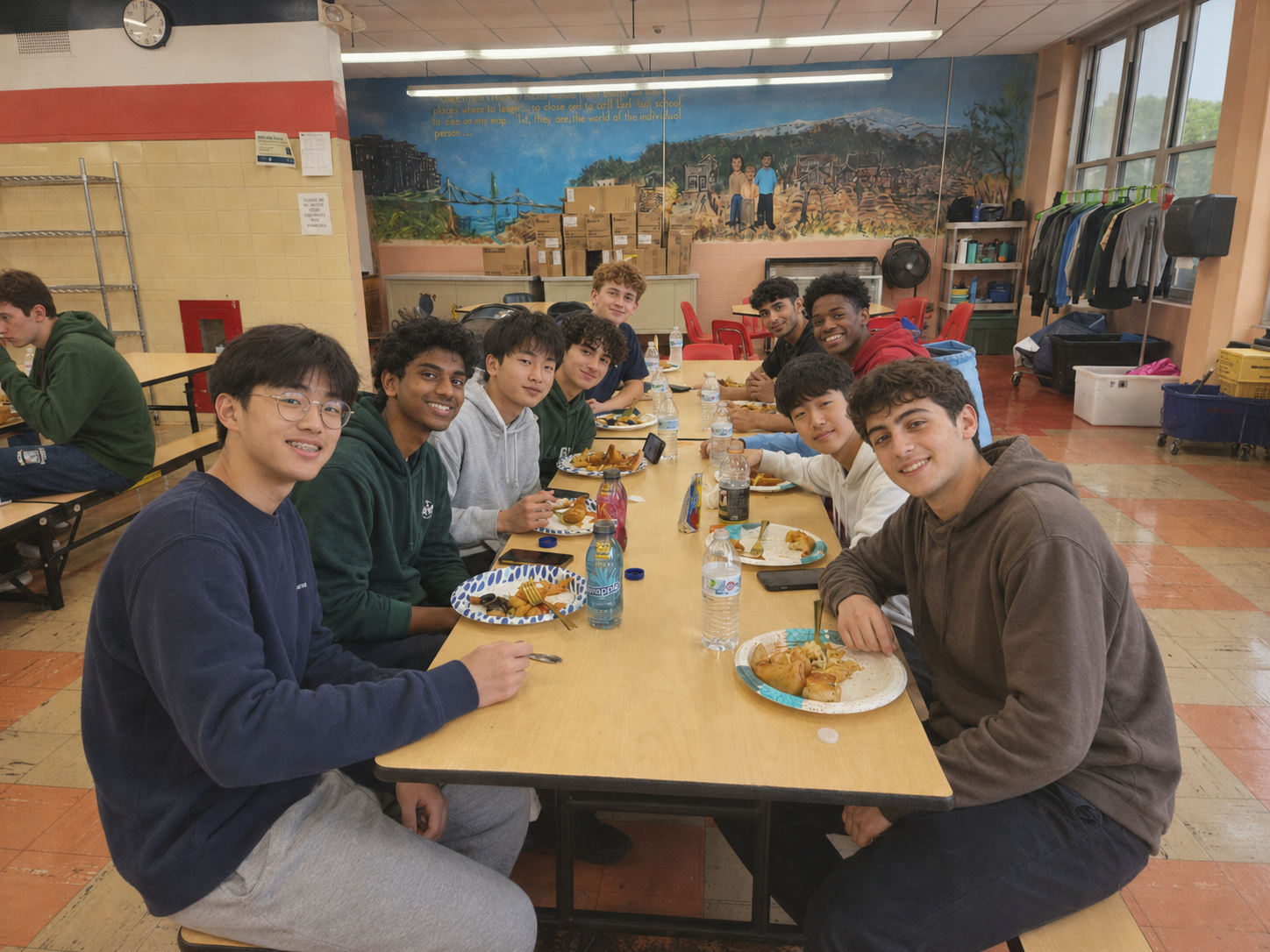
Lunchtime with Friends at Cafeteria
Middle School vs High School
U.S. high school usually runs four years, from Grade 9 to Grade 12. Middle school is less standardized, it varies by district. In my district, Tenafly, middle school was grades 6 to 8, three years.
School size varies a lot, too.
In many districts, several middle schools feed into a single high school, which makes the high school much bigger. Just how big really depends on the area: a small or rural school might have under 200 students per grade, while a large suburban or urban one can run 400 to 700 or more. My school, Tenafly High, had around 1,150 students across all four grades, roughly 280 to 300 per grade, which is a pretty typical size for a suburban high school.
Advice
One of the smartest moves is to go straight to the website of the school district you're moving into. Districts post a lot there like academic calendars, registration steps, course offerings, contact info. So it's the most reliable source for your specific school. As an example, here's the district I went to, Tenafly Public Schools.

Tenafly High School
Still have questions?
Join the Kakao channel — replies are usually within a day.